
Quick answer
Missed calls are expensive for contractors because they are often high-intent customer opportunities. When someone calls an HVAC, plumbing, roofing, electrical, solar, or cleaning company, they usually need help soon. If nobody answers, that customer may call the next company before your team even sees the missed call.
The cost of a missed call is not limited to one lost conversation. It can affect booking rates, ad spend efficiency, customer experience, lead attribution, dispatcher handoff, and owner visibility. In many contractor businesses, missed calls are not handled as part of a structured workflow. They are simply left in the call log and dealt with later, if at all.
A better approach is to treat missed calls as lead-handling events. A missed call should trigger a clear next step: a text-back, lead capture, urgency check, CRM entry, booking path, or internal alert. That is how missed-call recovery becomes part of a real revenue workflow instead of an afterthought.
A missed call is not always just a missed call

It is easy to treat a missed call as a small operational issue.
The phone rang.
Nobody picked up.
Someone will call back later.
That sounds minor until you look at what may have actually happened.
A customer may have needed urgent service.
A homeowner may have been ready to book.
A property manager may have needed a quote.
A paid ad may have generated the call.
A repeat customer may have been calling with a new job.
A high-value opportunity may have disappeared before the office ever identified it.
For contractors, the phone is not just a communication channel. It is often the front door of the business.
A missed call can be a missed job.
And often, it becomes an invisible missed job. If the caller does not leave a voicemail, does not answer when you call back, or books elsewhere first, the business may never know what it lost.
That is why missed calls for contractors should be treated as a workflow problem, not just a phone problem.
Missed calls are one part of the larger pattern behind why home-service companies lose leads even when they are getting enough inquiries.
What reliable research says about missed calls and lead response
The idea that missed calls damage revenue is not just a contractor complaint. It is supported by broader lead-response research, home-service industry reporting, and consumer decision guidance.
Harvard Business Review's article, "The Short Life of Online Sales Leads", highlights a core sales truth that also applies to contractor calls: response speed matters. When a potential customer reaches out and does not get a timely response, the value of that lead can decay quickly.
That matters even more in home services, where the need often feels urgent. Jobber's 2026 Home Service Trends Report reinforces the importance of lead response, quoting systems, and structured operations in home-service businesses. The report's broader takeaway is clear: faster response and cleaner systems support stronger performance.
Consumer guidance points in the same direction. The Better Business Bureau advises homeowners to compare contractors, check credibility, gather multiple quotes, and make careful hiring decisions. The Federal Trade Commission likewise advises consumers to check a contractor's reputation, credentials, and written details before moving forward. That means a missed call is not happening in a vacuum. The caller may already be evaluating several companies at once.
Salesforce's customer engagement research also supports the broader point that responsiveness and customer experience shape buying behavior. When a business is hard to reach, slow to respond, or unclear in the next step, trust can fall before the first job is even booked.
The takeaway is simple: a missed call is not only a missed conversation. It is often a lost chance to respond while intent is high.
Why missed calls are so expensive for home-service contractors
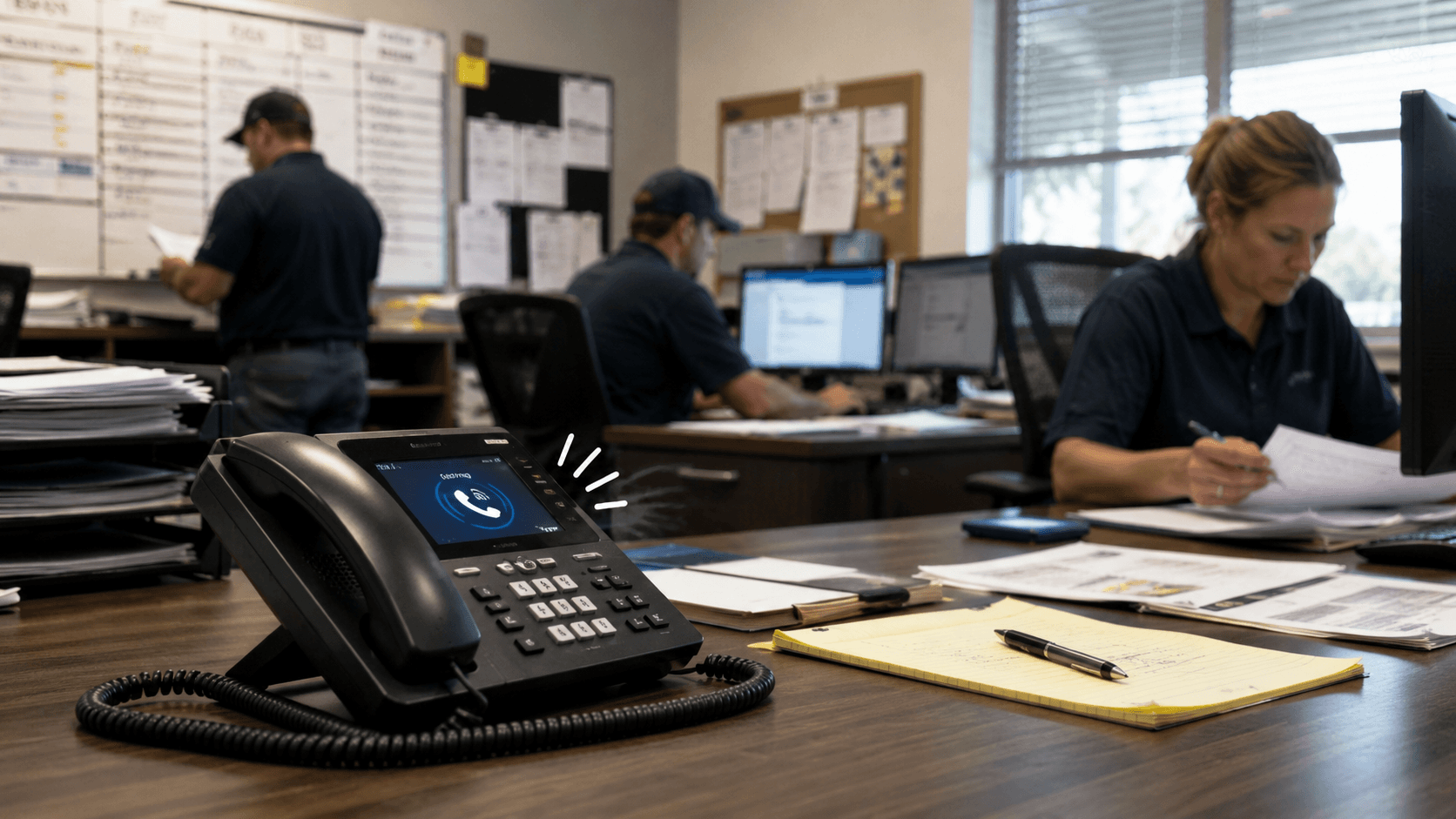
Missed calls are expensive because they happen at the exact moment when customer intent is high.
Someone searching for an HVAC company is often dealing with heat, cooling, repair, replacement, or maintenance concerns. Someone calling a plumber may have a leak, clog, water heater issue, or urgent problem. Someone calling a roofer may have storm damage, a leak, or a quote request. Someone calling an electrician may have a safety concern or installation need.
These are not casual website visitors scrolling with no intention.
Many callers are ready to take action.
That is why missed calls can affect:
Booking rates.
Ad spend return.
Customer experience.
Office workload.
Technician schedule fill.
CRM accuracy.
Marketing attribution.
Owner visibility.
A missed call is not only "someone we did not talk to."
It may be money already spent on marketing that did not turn into a booked opportunity.
It may be a customer who wanted to book but could not get through.
It may be a job your competitor won because they answered faster.
Customers often call the next company

Contractors often describe the problem this way:
"Whoever picks up first gets the job."
Another common contractor frustration is:
"If you don't answer, they're calling the next guy."
That is blunt, but it matches how many home-service customers behave. When the need feels urgent, they are not waiting patiently for one company. They are searching, calling, comparing, and trying to get help.
This is especially true for emergency or near-emergency situations.
No cooling during a heat wave.
No heat during cold weather.
Water leaking into the house.
A roof leak after a storm.
Electrical issues that feel unsafe.
A cleaning request before a move-out or event.
If the first company does not answer, the customer may immediately call the next one.
By the time your office calls back, the job may already be gone.
In contractor discussions, this pain often sounds like:
"By the time we call back, they already booked someone else."
That is the hidden danger. Your team may still be "following up," but the customer has already made the decision.
Missed calls waste marketing spend.

Contractors spend money to make the phone ring.
Google Ads.
SEO.
Local service ads.
Google Business Profile.
Yard signs.
Direct mail.
Referrals.
Social media.
Truck wraps.
Website content.
Agency retainers.
All of that effort is supposed to create inquiries.
But if calls are missed and not recovered, the business is paying to create demand that it cannot consistently capture.
That is why missed leads contractors face are not just a sales issue. They are also a marketing efficiency issue.
A campaign may look weak because the calls are not turning into jobs. But the real issue may not be the campaign. The real issue may be response speed, call capture, call routing, or follow-up.
Missed calls also make it harder to know which marketing channels are working.
If the business cannot clearly see which calls were answered, missed, recovered, booked, or lost, the owner is left guessing.
Was the ad bad?
Was the landing page weak?
Was the lead low quality?
Was the office too busy?
Did the customer call after hours?
Did anyone follow up?
Was the opportunity added to the CRM?
Without missed-call visibility, marketing decisions get blurry.
Missed calls are usually high-intent opportunities.
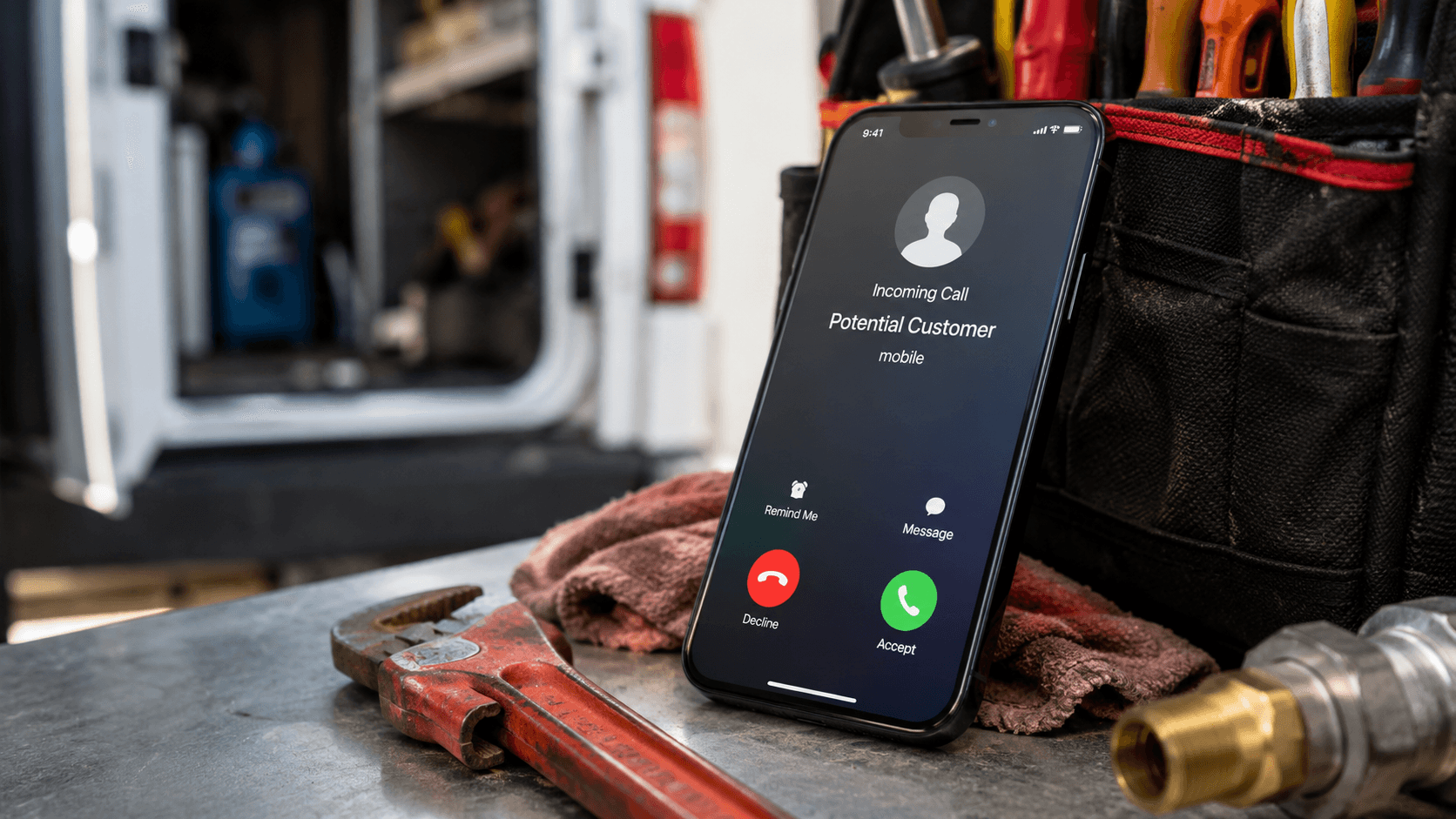
A phone call is often stronger than a passive website visit.
When someone calls, they are usually trying to solve something now. They may have questions, but they are already taking action.
That makes home service missed calls more painful than many other types of lost leads.
A form submission may wait.
An email may wait.
A social media message may wait.
A phone call usually means the customer wants a response now.
This is why HVAC missed calls, plumbing missed calls, and roofing missed calls can be especially expensive. These trades often deal with urgent, physical problems that customers do not want to delay.
A missed call could be:
A repair job.
A replacement estimate.
A maintenance booking.
A second opinion.
A warranty concern.
A commercial service request.
An emergency dispatch opportunity.
A repeat customer.
A referral.
Not every call is valuable. Some are spam, price shoppers, wrong numbers, or bad-fit leads.
But the mistake is treating all missed calls the same.
The business needs a way to separate emergency, normal booking, price question, callback request, approval-needed, and bad-fit inquiries quickly.
Why voicemail is not a reliable fallback anymore
Some contractors still assume voicemail will save the opportunity.
That is risky.
Home-service owners often describe the pain as:
"Almost nobody leaves voicemails anymore."
Many customers do not want to leave a message. They may not know what to say. They may assume nobody will call back quickly. They may already be calling multiple companies.
Even when customers do leave voicemails, the message may be incomplete.
They might leave a name but no address.
They might describe the problem poorly.
They might forget to mention urgency.
They might not include whether they are a homeowner.
They might not explain whether the issue is happening now.
They might speak quickly, making details hard to catch.
Voicemail is not a workflow. It is a backup.
A better missed-call recovery process should capture structured information immediately, even if the office cannot answer live.
That is where missed call text back can help.
A simple text can ask for the customer's name, service needed, address, urgency, and whether they want a callback or booking link.
That gives the office something useful to work with instead of a silent missed call.
Why busy offices miss calls even when the team is trying

Missed calls are not always caused by laziness.
In many contractor businesses, the office is overloaded.
One common contractor frustration is:
"The phone rings while everyone is already busy."
The office manager may be:
Helping a customer.
Talking to a technician.
Handling dispatch changes.
Following up on an estimate.
Collecting payment.
Checking invoices.
Updating the CRM.
Calling suppliers.
Managing complaints.
Sending appointment reminders.
Preparing documents.
Answering another call.
Owners cannot answer every call themselves either. If the owner is in the field, in a meeting, on another call, or handling operations, the phone may ring at the worst possible time.
This is why missed calls should not be treated as a simple people problem.
The team may be working hard and still losing opportunities because the workflow has no backup.
A missed call should trigger action automatically.
Not later when someone remembers.
Not only when someone checks the call log.
Not only if the customer leaves voicemail.
Immediately.
After-hours missed calls create a different kind of leakage.
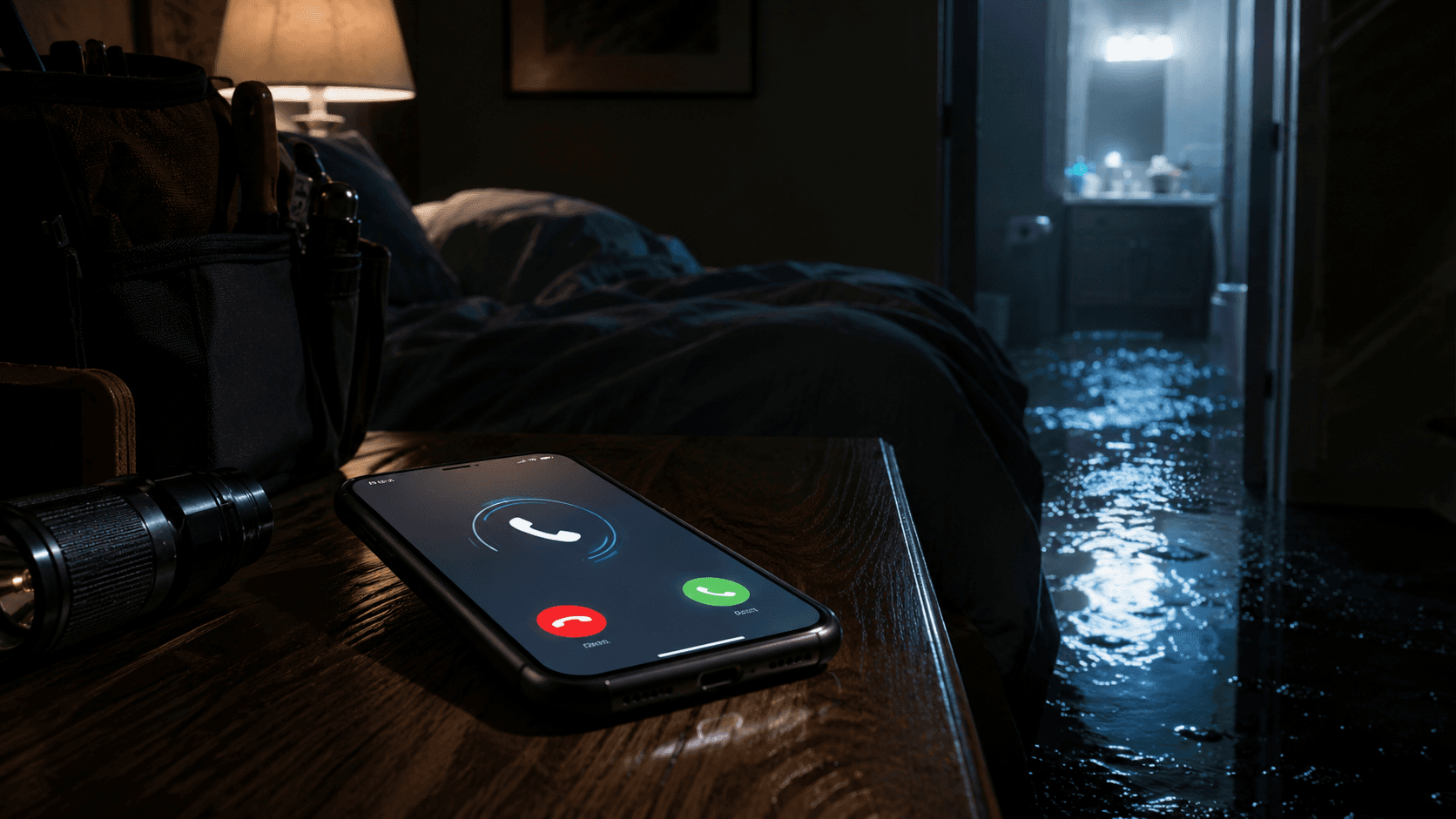
After-hours calls are complicated.
Some are real emergencies. Some can wait until morning. Some are price questions. Some are existing customers. Some are not in the service area. Some are urgent but not profitable. Some require owner approval.
If all after-hours calls go unanswered, urgent jobs can be lost.
If every after-hours call is treated like an emergency, the team gets burned out and technicians get sent into bad-fit situations.
A better workflow should sort after-hours inquiries based on urgency and fit.
For example:
Is there active leaking, flooding, no heat, no cooling, electrical danger, or property damage?
Is the customer in the service area?
Is this a service the company provides?
Is the customer willing to accept emergency pricing or next available booking?
Does this require immediate escalation or normal follow-up?
After-hours missed-call recovery should not blindly promise service. It should collect the right information and route the lead properly.
That protects the customer experience and the team.
The problem with only checking the call log later.
Many companies rely on the call log.
They check missed calls later and try to call back.
That is better than doing nothing, but it is not enough.
The problem is timing.
If the customer needed help now, a callback two hours later may be too late. If they called three contractors, they may already be booked. If they did not recognize your number, they may not answer. If they were frustrated, the experience may already feel weak.
The second problem is missing context.
A call log usually does not tell you:
What service they needed.
How urgent it was.
Whether they were in your service area.
Whether they were ready to book.
Whether they were a good fit.
Which marketing source produced the call.
Whether the lead should become a CRM opportunity.
Whether the owner should see it.
A call log is a record.
A missed-call recovery workflow is a process.
Contractors need the second one.
What a missed-call recovery workflow should do.
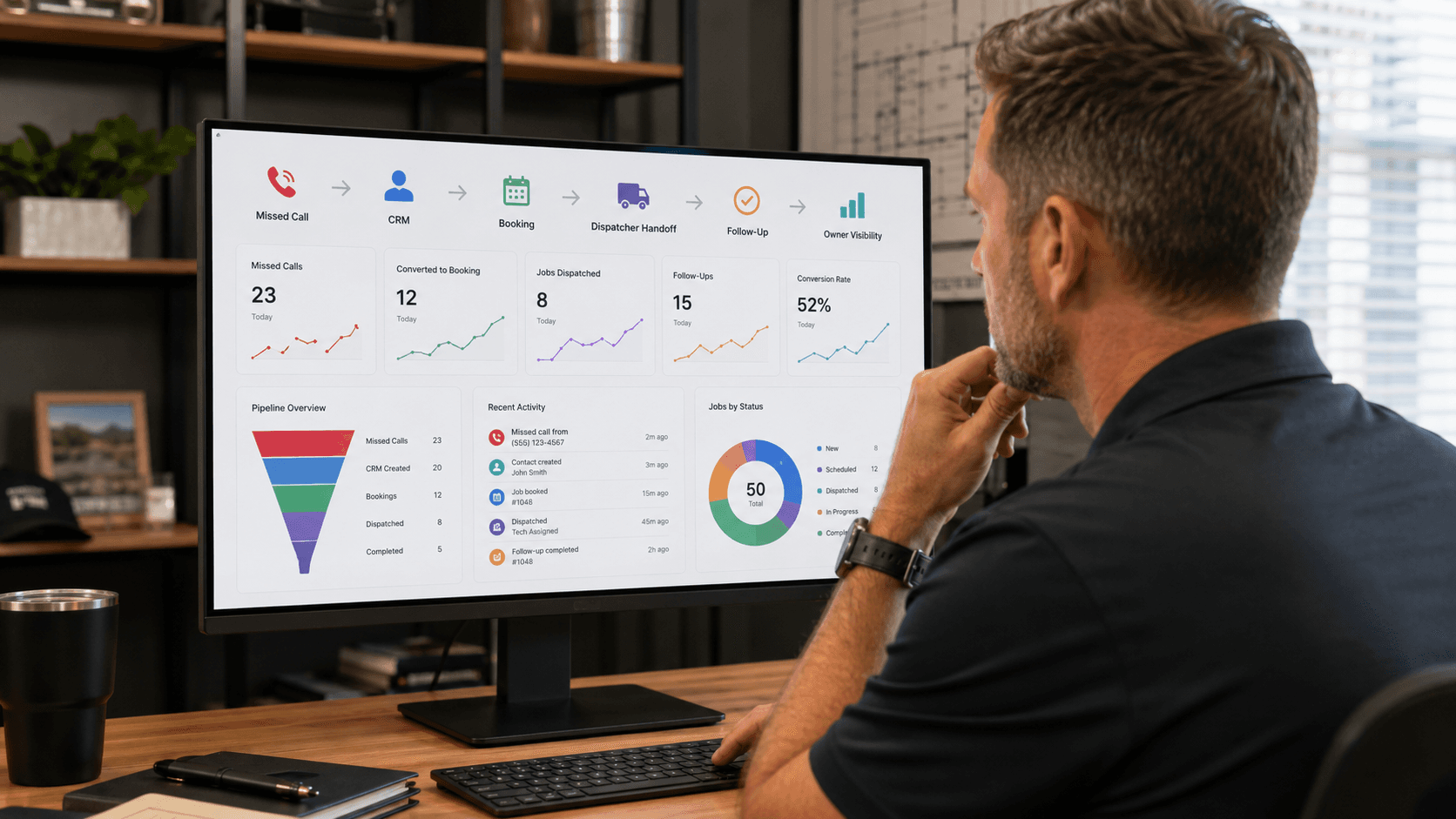
A missed-call recovery workflow should turn a lost moment into a recoverable opportunity.
At minimum, it should do five things.
First, it should respond quickly. The customer should receive an instant text-back or clear next step after the missed call.
Second, it should capture the basics. Name, service needed, address, urgency, and preferred next step are usually more useful than a blank callback attempt.
Third, it should qualify the lead. The system should help separate emergency calls, normal bookings, price questions, callback requests, approval-needed situations, and bad-fit leads.
Fourth, it should create visibility. The office, dispatcher, or owner should be able to see what happened and what needs action.
Fifth, it should connect to booking or follow-up. A missed call should not remain separate from the rest of the business.
This is where a lead capture system for contractors becomes valuable. The goal is not to make the phone process complicated. The goal is to make sure missed calls do not disappear.
How missed calls should be routed by urgency and fit.
Not every missed call deserves the same response.
A smart missed-call workflow should route based on the type of inquiry.
Emergency calls may need escalation.
Normal service requests may need booking.
Price questions may need qualification.
Repeat customers may need priority handling.
Commercial inquiries may need a different process.
Bad-fit leads may need polite filtering.
Approval-needed jobs may need owner or manager review.
For example, a homeowner with active water leaking should not be handled the same way as someone asking for a rough price on a future project.
A missed-call text-back can ask enough questions to sort the next step.
What service do you need?
What is the service address?
Is this urgent?
Is the issue happening right now?
Would you like a callback or booking link?
Are you the property owner or decision-maker?
This gives the team better information before they respond.
It also reduces wasted time on leads that were never a fit.
Why missed-call recovery should connect to CRM and booking.
Missed-call recovery should not live in isolation.
If the missed call creates a real opportunity, it should connect to the CRM, booking workflow, dispatcher handoff, and owner visibility.
Otherwise, the business creates another disconnected process.
A strong contractor lead capture workflow should make sure:
The contact is created or updated.
The lead source is tracked when possible.
The inquiry is tagged correctly.
The urgency level is visible.
The office receives an alert.
A callback or booking task is created.
The dispatcher receives the right details if needed.
The owner can see missed-call activity and recovery status.
This matters because missed calls are not only about answering faster.
They are about making sure the opportunity moves through the business.
That connects directly to the larger workflow issues covered across RIKU Growth's Services page, including lead capture, CRM handoff, follow-up, dispatch support, and owner visibility.
Missed Call Recovery Checklist for Contractors
Use this checklist to review whether your missed calls are being handled properly.
- Do missed calls trigger an instant text-back?
- Is the customer asked what service they need?
- Is the service address captured?
- Is urgency checked?
- Are emergency calls routed differently?
- Are price questions handled differently?
- Is a CRM contact or opportunity created?
- Does the office get an alert?
- Is there a booking or callback task?
- Can the owner see missed-call recovery activity?
If the answer is "no" to most of these, missed calls are probably creating more leakage than the call log shows.
You can also explore the interactive demo to see how missed-call recovery can connect with lead capture, CRM updates, booking, and internal alerts.
How owners can find out whether missed calls are costing them jobs.
Owners do not need to guess.
The first step is to review missed calls over a recent period. Look at call volume, missed-call count, call time, source, callback speed, whether the customer answered, and whether the inquiry became a booked job.
Then look for patterns.
Are calls missed during lunch?
After hours?
During dispatch-heavy times?
When the office manager is alone?
From paid ads?
From Google Business Profile?
From repeat customers?
From specific service areas?
For emergency jobs?
For estimates?
Then ask a harder question:
What happened after the missed call?
If the answer is "we do not know," that is the real problem.
A missed-call issue becomes dangerous when the owner cannot see the status.
You should be able to see which calls were missed, which were recovered, which became opportunities, which booked, which were bad-fit, and which still need follow-up.
If you cannot see that, you do not have a clear lead response workflow.
You have a call log and a lot of guessing.
How RIKU Growth helps contractors build missed-call recovery workflows.
RIKU Growth helps home-service companies improve the workflows between inquiries, CRM, booking, dispatch, follow-up, post-job reporting, review capture, and owner visibility.
For missed calls, that can include workflows such as:
Missed-call text-back.
Lead capture questions.
Service area checks.
Urgency routing.
Emergency escalation.
CRM contact creation.
Booking or callback tasks.
Office alerts.
Dispatcher handoff.
Owner visibility dashboards.
RIKU Growth is not a full field-service management software platform. It does not replace Jobber, Housecall Pro, ServiceTitan, QuickBooks, invoicing software, or a complete dispatch system.
Instead, RIKU Growth works as a workflow automation and revenue operations layer around the places where contractors often lose opportunities.
For some companies, the first step may be a simple missed-call capture workflow. For others, it may be CRM cleanup, after-hours handling, dispatch support, or booking follow-up.
The Packages page can help clarify what level of workflow support may fit your business.
Want to see how missed calls are handled in your current workflow?
RIKU Growth can review missed calls, lead sources, CRM handoff, after-hours response, and booking follow-up to identify where calls are leaking and what should be fixed first.
A missed call should not just sit in the call log.
It should trigger a clear workflow.
Final thought
Contractors do not lose jobs only because they lack leads.
Sometimes they lose jobs because the phone rings at the wrong moment, nobody answers, the caller does not leave a voicemail, and the follow-up happens too late or not at all.
That is not just a communication issue.
It is revenue leakage.
If your business is spending money to make the phone ring, then missed-call recovery is not optional. It is part of your lead capture system.
The goal is straightforward:
Capture the inquiry.
Check urgency.
Route the lead.
Create the CRM record.
Assign the next step.
Book or follow up.
Give the owner visibility.
If a missed call can become a booked job, it deserves a workflow.
Sources and further reading
- Harvard Business Review: "The Short Life of Online Sales Leads"
- Jobber: "2026 Home Service Trends Report"
- Better Business Bureau: "How to Hire a Reliable and Trustworthy General Contractor"
- Federal Trade Commission: "How To Avoid a Home Improvement Scam"
- Salesforce: Customer engagement research / State of the Connected Customer